

Cruising offers a remarkably efficient and luxurious way to experience the world. Instead of dealing with the logistical friction of multiple flights, train transfers, and repetitive hotel check-ins, travelers can unpack their bags once and let a floating resort transport them to iconic global landmarks. A cruise itinerary curated by industry experts provides a balanced blend of cultural immersion, historical exploration, and geographical diversity.
The global cruise market features itineraries spanning nearly every major body of water on earth. From the sun-drenched beaches of tropical islands to the dramatic glacial fjords of polar regions, there is a route tailored to every style of exploration. For travelers mapping out their next maritime adventure, several iconic regions stand out as essential destinations that offer unparalleled coastal experiences.
The Caribbean: The Classic Tropical Escape
The Caribbean remains the undisputed heart of the global cruise industry. Divided into eastern, western, and southern itineraries, this sprawling archipelago offers a reliable mixture of warm weather, azure waters, and diverse colonial history. It is an ideal region for first-time cruisers and seasoned travelers looking for a mix of relaxation and soft adventure.
Eastern Caribbean routes typically focus on standard pristine beach environments and luxury shopping. Islands like Saint Thomas, Saint Maarten, and Puerto Rico offer beautiful coastal vistas alongside historic Spanish fortresses and vibrant local craft markets. These ports are highly accessible and feature excellent infrastructure for shore excursions.
Western Caribbean itineraries lean heavily into eco-tourism, ancient history, and active excursions. Ports along the coast of Cozumel, Costa Maya, Jamaica, and Roatan allow travelers to step directly off the ship and explore ancient Mayan ruins, snorkel along the Mesoamerican Barrier Reef, or trek through lush tropical rainforests. Southern itineraries, which often depart from San Juan or Barbados, visit more remote islands like Aruba, Curacao, and Saint Lucia, characterized by dramatic volcanic topography and distinct Dutch and French architectural influences.
The Mediterranean: A Deep Dive into Antiquity and Art
For travelers who prioritize cultural enrichment, art history, and culinary exploration, a Mediterranean cruise is unmatched. The region is traditionally split into western and eastern routes, each offering a distinct historical narrative and aesthetic.
The Western Mediterranean serves as a grand tour of classical European romance. Standard itineraries sail along the coastlines of Spain, France, and Italy, stopping at heavy-hitting ports like Barcelona, Civitavecchia (the gateway to Rome), Livorno (offering access to Florence and Pisa), and Marseille. Travelers can spend their mornings walking through centuries-old cathedrals, their afternoons exploring world-class art museums, and their evenings dining on authentic regional pasta or tapas before returning to the ship.
The Eastern Mediterranean offers a more rugged, sun-bleached landscape dominated by ancient empires and maritime trade routes. This region highlights the Greek Isles, the Dalmatian Coast of Croatia, and the ancient ruins of Turkey. Sailing past the iconic white-and-blue cliffs of Santorini, walking through the beautifully preserved medieval walled city of Dubrovnik, or exploring the monumental ruins of Ephesus via the port of Kusadasi provides an immersive look into the foundations of Western civilization.
Alaska: Glaciers, Wilderness, and Majestic Wildlife
An Alaskan cruise represents a radical departure from traditional sun-and-sand itineraries, attracting travelers who yearn for raw natural beauty and dramatic landscapes. The standard cruise season runs from May through September, providing a window into the pristine wilderness of the Pacific Northwest.
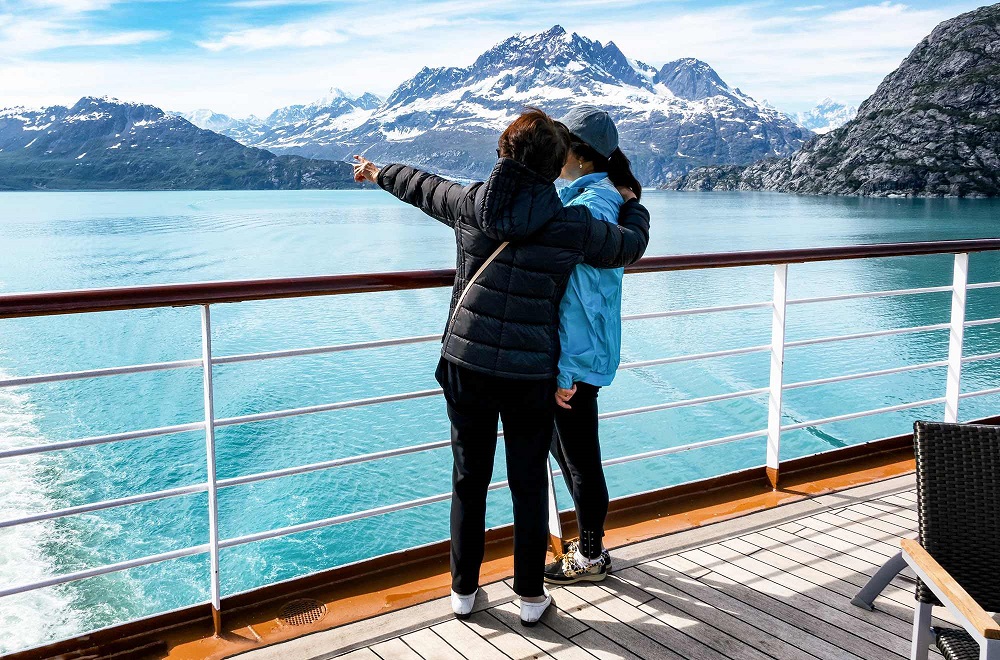
Most Alaskan itineraries traverse the Inside Passage, a complex network of protected waterways flanked by towering mountains, dense emerald rainforests, and massive tidewater glaciers. The slow-speed navigation allows passengers to view towering walls of ice calving directly into the ocean from the comfort of the ship deck or private balconies. Glacier Bay National Park and Hubbard Glacier are central highlights of these routes.
The port towns of Alaska offer rich glimpses into Gold Rush history and indigenous Tlingit culture. In Skagway, travelers can ride the historic White Pass and Yukon Route railroad into the mountains. In Juneau, adventures include whale watching in Auke Bay or hiking up to the face of the Mendenhall Glacier. Ketchikan, known as the totem pole capital of the world, provides an excellent look into Native American artistry and features a historic waterfront built entirely over the water on wooden pilings.
Northern Europe and the Baltic Sea: Castles and Nordic Design
Sailing through Northern Europe allows travelers to explore the rich history of Scandinavia, the Baltic nations, and the British Isles. These itineraries are highly appreciated for their smooth sea conditions and the architectural beauty of the historic capital cities positioned directly along the water.
Baltic Sea cruises frequently feature stops in Copenhagen, Stockholm, Helsinki, and Tallinn. The transition from the colorful seventeenth-century harbors of Denmark to the ultra-modern, minimalist design aesthetics of Finland provides an interesting cultural study. Walking through the fairy-tale cobblestone streets of Tallinn, Estonia, transports travelers back to the Middle Ages, while the sprawling archipelagos surrounding Stockholm offer beautiful maritime scenery during sail-away hours.
Alternative Northern European routes head toward the Norwegian Fjords or around the British Isles. The Norwegian coastal routes navigate deep inland waterways, surrounded by sheer mountain cliffs and dramatic waterfalls like the Seven Sisters. These itineraries are highly focused on scenic cruising and outdoor exploration, making them a favorite for landscape photographers.
Asia and the South Pacific: Exotic Rhythms and Remote Paradigms
For those seeking long-haul adventures and complete sensory transformation, the cruise networks across Southeast Asia, Japan, and the South Pacific islands offer highly compelling options.
Southeast Asian itineraries often hop between the hyper-modern skylines of Singapore and Hong Kong, interspersed with stops at the ancient temples of Thailand, Vietnam, and Indonesia. Cruising along Ha Long Bay in Vietnam, with its thousands of towering limestone karsts rising out of emerald waters, is a signature bucket-list experience that is best viewed from the water.
Japan-intensive cruises have surged in popularity, offering a highly efficient way to navigate the island nation mountainous geography. These routes allow travelers to experience the neon-lit energy of Tokyo and Osaka, alongside the quiet, historic shrines of Kyoto and the dramatic volcanic backdrops of Kagoshima. In the remote South Pacific, cruises heading toward Fiji, Tahiti, and Bora Bora cater to those seeking ultimate isolation, characterized by coral atolls, overwater bungalows, and pristine Polynesian hospitality.
Frequently Asked Questions
What is the difference between a river cruise and an ocean cruise?
Ocean cruises utilize massive vessels designed to navigate open seas, carrying thousands of passengers and offering extensive onboard amenities like theaters, multiple pools, and large casinos. River cruises utilize much smaller, low-profile vessels designed to navigate inland waterways like the Danube or Rhine in Europe. River cruises carry fewer passengers, focus heavily on historical city centers, stop nearly every day, and do not feature heavy waves or motion sickness.
How do I choose between a closed-loop and an open-jaw cruise itinerary?
A closed-loop cruise begins and ends at the exact same port, such as a round-trip voyage from Miami. These are highly convenient for parking logistics and round-trip flight bookings. An open-jaw cruise begins in one city and ends in a completely different destination, such as starting in Vancouver and ending in Anchorage. Open-jaw cruises allow you to cover more geographical distance and spend more time exploring inland destinations before or after the voyage.
What is the best time of year to book a cruise to get the lowest prices?
The lowest prices are generally found during the shoulder seasons or during Wave Season, which runs from January through March when cruise lines launch their major yearly promotional campaigns. For specific regions, look for transition weeks at the very beginning or end of the sailing season, such as booking an Alaskan cruise in early May or a Mediterranean cruise in late October, when demand drops due to cooler weather.
Are shore excursions mandatory, or can I explore ports independently?
Shore excursions are completely optional. While booking a ship-sponsored tour guarantees the vessel will wait for you if the tour runs late, you are entirely free to step off the ship and explore the port independently. You can hire local taxis, take public transit, or book independent local guides, provided you pay close attention to the ship shipboard time and return well before the gangway closes.
How do cruise lines handle tipping and gratuities onboard?
Most modern cruise lines automatically add a daily per-guest gratuity charge to your onboard ship account to be distributed among the dining staff, stateroom stewards, and behind-the-scenes crew. Alternatively, you can choose to prepay these service charges at the time of booking to simplify your final checkout bill. Additional tips for exceptional personal service can be handed out in cash at your own discretion.
What should I pack for a cruise that visits both warm and cool micro-climates?
The secret to packing for diverse itineraries, such as an Alaskan cruise or a transatlantic crossing, is strategic layering. Pack lightweight, moisture-wicking base layers, a fleece insulating layer, and a high-quality windproof and waterproof outer jacket. This allows you to adjust your clothing as the daily weather changes without packing heavy, bulky items that overwhelm your luggage allowance.


