Human beings are hardwired to seek comfort, predictability, and social reinforcement. From childhood through adulthood, most individuals operate within a carefully constructed safety net composed of family, lifelong friends, familiar neighborhoods, and established routines. While this structure provides psychological security, it can also create a stagnant environment where personal growth plateaus. When you always have someone to lean on, delegate to, or validate your choices, your underlying muscles of self-reliance can begin to atrophy.
Stepping completely outside of this collective safety net by choosing to travel alone is one of the most immediate and profound catalysts for psychological transformation available in the modern world. Solo travel is far more than a recreational vacation; it is a rigorous, real-world exercise in personal development. By separating yourself from the familiar and navigating foreign landscapes entirely on your own terms, you force a radical restructuring of your self-concept, building an ironclad sense of confidence and autonomy that cannot be replicated in daily domestic life.
Forging Radical Self-Reliance and Decisiveness
In daily life, decision-making is often a collaborative effort. Whether deciding where to eat dinner or how to navigate a complex logistical crisis, humans naturally tend to distribute the cognitive load among partners, friends, or family members. When you travel solo, this safety net vanishes completely. Every single choice, from the monumental to the mundane, rests squarely on your shoulders.
This absolute autonomy can initially feel overwhelming, but it quickly transforms into a powerful source of empowerment. You must decide how to navigate a foreign transit system when the signs are in an unfamiliar alphabet. You must manage your budget, select safe accommodations, and determine how to spend every hour of your day.
The Mechanics of Solo Decision-Making
- The Elimination of Consensus-Building: There is no waiting for a group agreement or compromising on your preferences. You learn to identify what you genuinely want and execute a plan to achieve it immediately.
- Crisis Management Autonomy: When a flight is canceled, a train is missed, or a map fails, there is no one else to blame or look to for a solution. You must stabilize your emotional response, analyze the available options rationally, and take immediate corrective action.
- Validation Shift: Because there is no familiar companion to reassure you that you made the right move, you stop looking for external validation. You learn to trust your intuition and take full ownership of the outcomes of your choices.
Breaking the Mirror of Social Conditioning
The psychological concept of the looking-glass self suggests that individuals shape their identities based on how they perceive others viewing them. Within your established social circles, you occupy a specific role: you are the quiet one, the organized one, the impulsive one, or the pragmatic leader. Family and friends hold up a mirror that continuously reinforces these behavioral expectations, making it incredibly difficult to break free from your conditioned patterns of behavior.
Solo travel completely shatters this mirror. When you walk into a hostel, check into a boutique hotel, or sit down at a local café in a foreign country, you are completely anonymous. No one knows your history, your professional title, your past failures, or your social anxieties. This anonymity provides a rare, liberating blank slate.
Without the weight of external expectations, you are free to experiment with new facets of your personality. You can practice being more assertive, more spontaneous, or more extroverted without fearing the judgment of people who have known you for years. This freedom allows you to strip away the layers of social conditioning and discover who you actually are when no one is watching, accelerating your journey toward genuine self-knowledge.
Transforming Loneliness into Comfortable Solitude
One of the primary barriers that prevents people from embarking on a solo journey is the profound fear of loneliness. In a hyper-connected world dominated by continuous digital interaction, the prospect of spending extended periods alone with your own thoughts can feel deeply uncomfortable.
However, avoiding completely solitary experiences prevents you from developing emotional maturity. Solo travel directly confronts this discomfort, forcing a critical cognitive shift: the transformation of anxious loneliness into grounded solitude.
During the initial days of a solo trip, you will likely experience moments of acute vulnerability when sitting alone at a restaurant or exploring a historic site without a companion to share the experience. Pushing through this discomfort teaches your nervous system that being alone is not a crisis. You begin to appreciate the quiet spaces between activities, developing a rich internal dialogue and learning to enjoy your own company. Cultivating this comfort with solitude is a superpower; once you realize you do not need another person to feel complete or entertained, your baseline anxiety drops significantly.
Enhancing Social Agility and Cultural Empathy
An irony of solo travel is that you are rarely actually alone unless you choose to be. When individuals travel in couples or groups, they inadvertently create a visual and psychological wall around themselves. Locals and fellow travelers are hesitant to interrupt a group conversation, and the group members rarely feel the need to seek out external connections because their social needs are already met.
A solo traveler, by contrast, is highly approachable. Without a companion to talk to, you are forced to look outward and engage with your immediate environment to fulfill your natural human need for connection.
Strategies That Drive Social Agility
- Initiating Low-Stakes Conversations: You learn the art of casual interaction, whether asking a local for directions, striking up a conversation with a shopkeeper, or introducing yourself to fellow travelers at a communal table.
- Developing Active Listening Skills: When navigating conversations across language barriers, you learn to pay close attention to non-verbal cues, tone of voice, and body language, which significantly enhances your overall emotional intelligence.
- Cultivating Deep Cultural Empathy: Because you are navigating the local environment independently, you interact more intimately with the daily realities of the host culture. You see the world through a completely different historical and socioeconomic lens, which expands your worldview and dismantles personal biases.
Integrating the Confidence Back into Domestic Life
The true value of solo travel is not fully realized while you are away; it manifests clearly upon your return home. The confidence built on the road is not a temporary high; it is a permanent alteration of your psychological framework that integrates into your professional and personal life.
When you return to your workplace or your community after successfully navigating a foreign country alone, standard daily stressors lose their power to intimidate you. If you were capable of successfully managing a missed connection in a remote train station without speaking the local language, a difficult corporate presentation or an awkward social interaction at home feels entirely manageable. You develop a calm inner core of resilience, knowing that whatever chaos or unexpected challenges life throws at you, you possess the resourcefulness and capability to handle them completely on your own.
Frequently Asked Questions
How do I handle intense home sickness during the first few days of a solo trip?
Homesickness is a natural response to the sudden removal of your familiar comfort zones. To manage this without cutting your trip short, establish a gentle daily routine that mimics a sense of stability, such as visiting the same local coffee shop every morning. Limit your time scrolling through social media feeds from home, which exacerbates the feeling of missing out, and focus instead on engaging your senses in the present environment through journaling or walking.
Is solo travel beneficial for deep introverts who prefer minimum social interaction?
Yes, solo travel is exceptionally beneficial for introverts. Unlike group travel, which requires continuous social compromise and leaves little time for energetic recharge, solo travel allows an introvert to design a schedule perfectly tailored to their energy cycles. An introvert can spend days exploring museums and nature trails in complete solitude without needing to explain their silence, allowing for deep mental restoration.
What is the best way to handle dining alone at a sit-down restaurant?
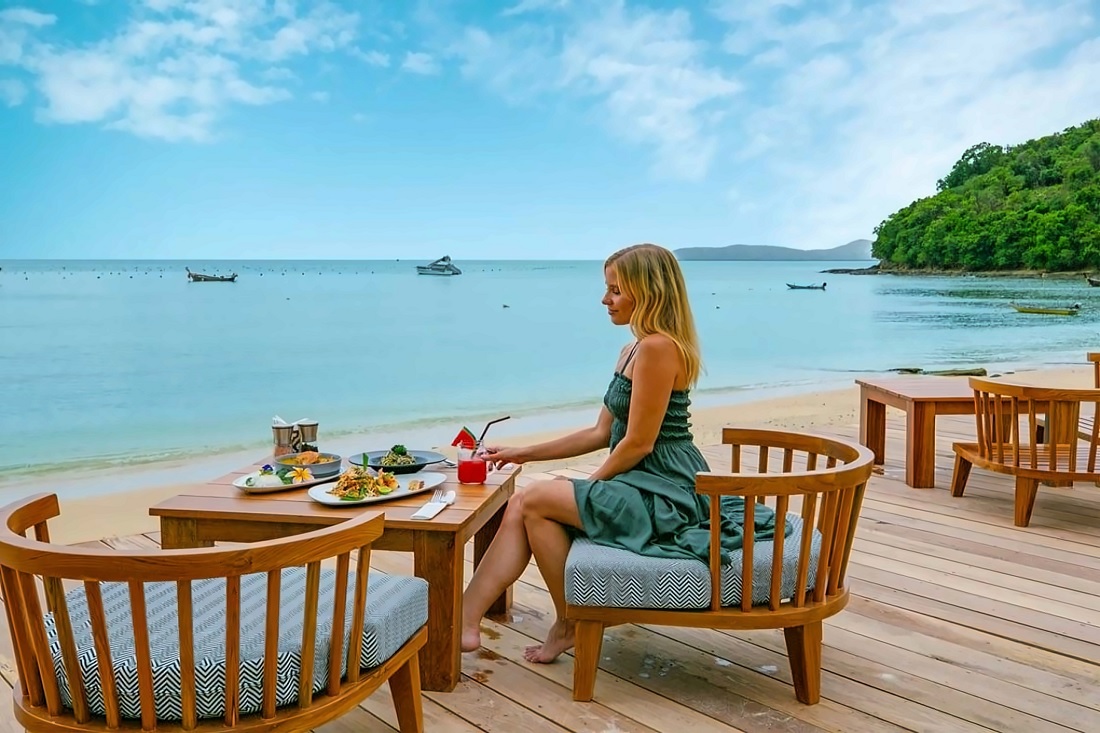
Dining alone is a common source of anxiety for first-time solo travelers who worry about being judged by other patrons. To ease into the experience, request a seat at the bar or a small counter facing a window, which provides a natural view and puts you in closer proximity to the staff or other single diners. Alternatively, bring a physical book or a journal to focus your attention, or plan your main meals during lunchtime when restaurant atmospheres are more casual.
How can solo travel help someone recover from a major life transition like a breakup or job loss?
A major life transition often shatters an individual established identity and routine, leaving them feeling ungrounded. Solo travel serves as an intentional rite of passage, creating a clean break from the environment where the emotional trauma occurred. The immediate physical and logistical demands of travel force the mind into the present moment, breaking the cycle of repetitive negative thinking and proving that you are capable of creating a vibrant new life independently.
How do I balance the desire for spontaneity with the need for safety planning?
The ideal approach is to build a structured framework that leaves room for internal flexibility. Secure your primary transportation links and book highly rated, vetted accommodations for every night of your trip in advance to establish a baseline of safety. Once the logistical foundation is stable, leave your daytime itineraries open. Avoid booking strict hourly tours, allowing yourself the freedom to change plans based on local recommendations or spontaneous opportunities.
What should I do if I get sick while traveling completely alone in a foreign country?
Prior to departure, always secure comprehensive travel insurance that includes medical coverage and locate the primary international hospitals in your destination cities. If you fall ill, communicate immediately with your accommodation management or hostel front desk; hospitality staff are accustomed to assisting travelers and can direct you to trusted local clinics, arrange for a doctor to visit your room, or help translate medical documents.